
What Betzoid Explains About UEFA Europa League Match Formats
The UEFA Europa League stands as one of the most compelling club football competitions in the world, attracting millions of viewers across continents and offering clubs a prestigious pathway to European glory. Understanding how this tournament is structured, however, can be a challenge for casual fans and dedicated followers alike. The competition has undergone several significant transformations over the decades, evolving from its origins as the UEFA Cup into the sophisticated, multi-phase tournament it is today. Platforms like Betzoid have taken on the task of breaking down these complex formats, helping fans and analysts alike gain a clearer picture of how matches are organized, how teams progress, and what makes each stage of the competition uniquely significant.
The Historical Evolution of the Europa League Format
The UEFA Europa League as a named competition came into existence in the 2009–10 season, replacing the long-running UEFA Cup that had existed since 1971. The UEFA Cup itself was a storied competition, initially featuring a straightforward two-legged knockout format throughout its entire duration. Teams would play home and away legs, with aggregate scores determining progression. This format was simple, effective, and gave home advantage a meaningful role in determining outcomes.
When UEFA rebranded and restructured the competition in 2009, the goal was to create a more commercially attractive and structurally coherent tournament that could better compete with the prestige of the UEFA Champions League. The introduction of a group stage was the most significant change, borrowing from the Champions League model and giving the Europa League a more prominent identity. Teams were now placed into groups of four, playing six matches in a round-robin format before the knockout rounds began.
Over the years, UEFA continued to refine the competition. The introduction of the UEFA Europa Conference League in 2021 further reshuffled the European football pyramid, allowing the Europa League to become slightly more exclusive. Clubs that finished third in their Champions League group were no longer automatically dropped into the Europa League’s knockout rounds — a rule that had long been a point of contention among purists who felt it diluted the competition’s integrity.
Betzoid has documented these historical shifts in considerable detail, providing fans with a chronological understanding of how the tournament’s structure has changed and why those changes were made. By tracing the competition’s roots back to the Inter-Cities Fairs Cup of the 1950s and 1960s, which is widely considered the precursor to the UEFA Cup, Betzoid contextualizes modern formats within a broader historical narrative that enriches the viewing experience.
Understanding the Current Multi-Phase Match Structure
The contemporary UEFA Europa League format is a sophisticated system that begins long before the group stage or league phase and involves numerous qualifying rounds designed to whittle down a large field of entrants. The competition typically begins in late June or early July with the first qualifying round, where smaller clubs from lower-ranked UEFA associations enter the competition. These early rounds use the traditional two-legged aggregate format, with each team hosting one match.
As the qualifying rounds progress through the second and third qualifying rounds and then the playoff round, the quality of clubs increases significantly. Teams that have been eliminated from Champions League qualifying also enter the Europa League at various stages, adding depth and unpredictability to the competition. Betzoid explains that this tiered entry system is intentional, designed to ensure that clubs of similar caliber meet each other at appropriate stages while also giving smaller clubs genuine competitive opportunities.
The league phase, which replaced the traditional group stage starting from the 2024–25 season, represents the most dramatic structural change in the competition’s recent history. Under this new format, all participating clubs are placed into a single large league table rather than being divided into separate groups. Each team plays eight matches against eight different opponents, with the schedule determined by a seeded draw. This format was inspired by the Swiss system used in chess tournaments and was simultaneously adopted across all three of UEFA’s club competitions.
Those who explore the detailed breakdowns provided by Betzoid will find that the platform offers comprehensive explanations of how the seeding system works within this league phase, how teams are ranked when points are level, and what the precise cutoff positions mean for each club’s European future. Teams finishing in the top eight advance directly to the round of sixteen, while those finishing between ninth and twenty-fourth place enter a knockout playoff round to compete for the remaining spots. Clubs finishing twenty-fifth or below are eliminated entirely from European competition.
The knockout rounds that follow maintain the traditional two-legged aggregate format that has defined European football for generations. Each tie involves a home and away leg, with the team scoring more goals across both matches advancing. Away goals no longer serve as a tiebreaker — a rule UEFA abolished in 2021 — meaning that teams level on aggregate after both legs proceed to thirty minutes of extra time and, if necessary, a penalty shootout. Betzoid highlights this rule change as one of the most impactful adjustments in recent memory, noting how it has altered tactical approaches in second legs where away goals were previously a decisive factor.
Key Tactical and Competitive Implications of the Format
The structure of a competition does not merely determine how teams progress — it fundamentally shapes how they approach each match tactically and how managers allocate resources across a demanding season. The Europa League’s format presents unique challenges that differ significantly from domestic league football, and Betzoid’s analytical coverage explores these dimensions with considerable depth.
In the league phase, teams face the challenge of maintaining consistency across eight matches against varied opposition from different footballing cultures and tactical traditions. Unlike a group stage where a team might face familiar opponents from the same continental region, the league phase draws are designed to create diverse matchups. A club from the English Premier League might find itself facing opponents from Turkey, Portugal, Greece, and the Netherlands in quick succession, requiring rapid tactical adaptation.
The two-legged knockout format introduces a different set of strategic considerations. Teams with a home leg first must decide whether to play aggressively and build a lead or adopt a more conservative approach that prioritizes not conceding away goals — even though away goals no longer carry extra weight. Conversely, teams playing the first leg away face the calculation of whether to attack and risk conceding or defend and rely on home advantage in the second leg.
Betzoid’s analysis of historical Europa League campaigns reveals interesting patterns in how successful teams have navigated these tactical dilemmas. Clubs that have won the competition multiple times, such as Sevilla — who have claimed the trophy an extraordinary seven times — have demonstrated a particular aptitude for managing the dual demands of league and European football while peaking at the right moments in the knockout rounds. Sevilla’s dominance of the competition is a statistical anomaly that speaks to exceptional organizational capability and squad depth.
Squad rotation also becomes a critical factor in Europa League campaigns, particularly for clubs simultaneously competing in domestic leagues and cup competitions. The Thursday match schedule — Europa League matches are traditionally played on Thursday evenings — creates a compressed turnaround before the following Sunday’s or Monday’s league fixtures. Managers must carefully balance the need to field competitive teams in Europe while preserving key players for domestic priorities, and the format’s structure directly influences these decisions.
How Betzoid Presents Format Information to Different Audiences
One of the notable aspects of how Betzoid approaches Europa League content is its commitment to making complex structural information accessible to audiences with varying levels of football knowledge. The platform recognizes that its readership includes casual fans who may be watching European football for the first time, as well as experienced analysts who require granular detail about regulations and tiebreaking procedures.
For newer fans, Betzoid provides foundational explanations that contextualize the Europa League within the broader European football ecosystem. This includes explaining the relationship between the Europa League and the Champions League, clarifying how clubs qualify for the competition through their domestic league finishes or cup victories, and outlining what winning the Europa League means in terms of future European qualification — specifically, that the winner earns a place in the following season’s Champions League group stage.
For more experienced readers, Betzoid delves into nuanced aspects of the format that are rarely discussed in mainstream football coverage. These include the precise UEFA coefficient calculations that determine seeding positions, the specific regulations governing which players are eligible to represent clubs having transferred mid-competition, and the logistical considerations that influence match scheduling across different time zones and national football calendars.
The platform also provides historical data comparisons that illustrate how format changes have affected competitive outcomes. For instance, analysis of the group stage era versus the new league phase model reveals differences in how often lower-seeded clubs managed to advance, what the average number of goals per match was at different stages, and how the elimination of away goals changed the distribution of results in knockout ties. This kind of data-driven perspective elevates the quality of football discourse and gives fans genuine analytical tools for understanding the competition.
Betzoid also addresses common misconceptions about the Europa League format, such as the mistaken belief that the competition is simply a consolation prize for clubs that failed to qualify for the Champions League. In reality, the Europa League has its own distinct prestige, its own passionate supporter culture, and its own tactical demands that make it a genuinely challenging and rewarding competition for the clubs that pursue it seriously.
Conclusion
The UEFA Europa League’s match format is a carefully engineered system that balances tradition with innovation, accessibility with prestige, and competitive integrity with commercial viability. From its origins as the UEFA Cup’s simple knockout structure to the sophisticated league phase model introduced in 2024, the competition has continuously evolved to reflect UEFA’s ambitions and the changing landscape of European football. Betzoid’s detailed coverage of these formats provides fans and analysts with the contextual understanding necessary to fully appreciate what unfolds on the pitch. By combining historical perspective with current structural analysis, the platform serves as a genuinely valuable resource for anyone seeking to understand one of football’s most dynamic and consequential competitions.
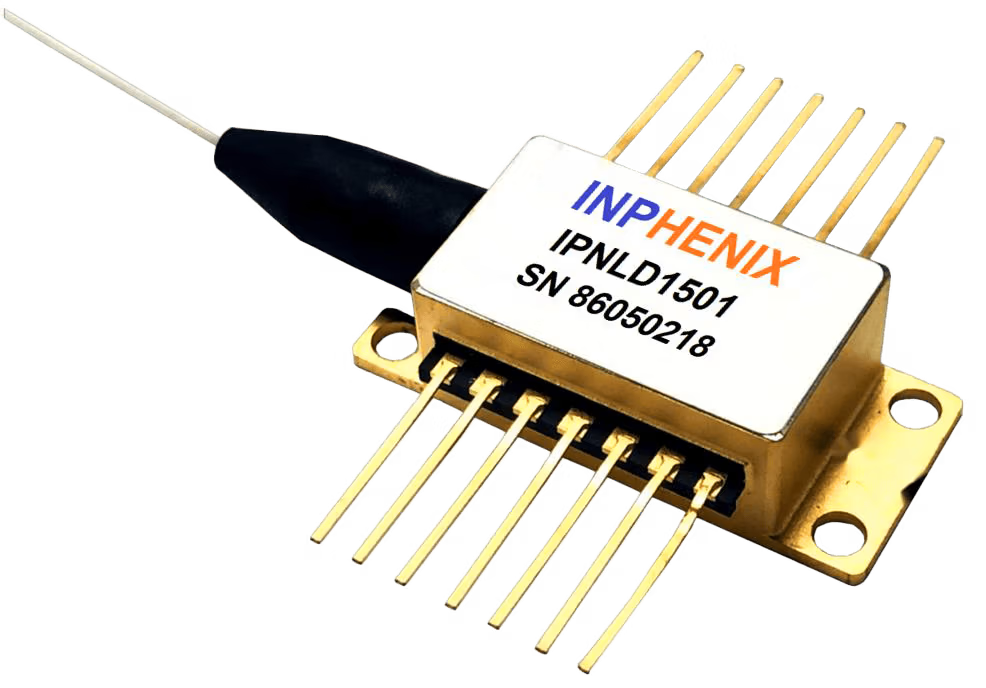
Narrow-Linewidth (NL) lasers are highly specialized laser devices designed to emit light at a single frequency with an extremely narrow optical emission spectrum. This narrow spectral width is typically in the range of one kilohertz to a few megahertz, which is a significant reduction in frequency variation compared to standard lasers. The development of ultra-narrow linewidth (NL) lasers involves advanced design and engineering techniques, including the use of modulation, external cavity configurations, high-quality optical components, resonators, and precise control of the laser cavity. These elements work together to produce a laser output with exceptional spectral purity and stability, making these lasers indispensable in applications where precision is critical.
Window(nm)
From: |
Peak Wavelength(nm) |
Threshold Current(mA) |
Output Power(mW) |
Polarization Extinction Ratio(dB) |
Relative Intensity Noise(dB/Hz) |
Lorents Linewidth*(kHz) |
Optical Isolation(dB) |
Side Mode Suppression Ratio(dB) |
Package Type |
Part Number |
|---|---|---|---|---|---|---|---|---|---|---|
| Window(nm) | Peak Wavelength(nm) | Threshold Current(mA) | Output Power(mW) | Polarization Extinction Ratio(dB) | Relative Intensity Noise(dB/Hz) | Lorents Linewidth*(kHz) | Optical Isolation(dB) | Side Mode Suppression Ratio(dB)) | Package Type | Part Number |
| 1550 | 1530-1565 | 35 | 10 | >20 | <-145 | 2 | 50 | 55 | Butterfly | IPNLD1502 |
| 1550 | 1530-1565 | 35 | 20 | >20 | <-145 | 3 | 50 | 55 | Butterfly | IPNLD1501 |
| 1550 | 1545-1555 | 35 | 40 | >20 | <-120 | 100 | 50 | 55 | Butterfly | IPNLD1503 |
| 1550 | 1545-1555 | 35 | 40 | >20 | <-120 | 200 | 50 | 55 | Butterfly | IPNLD1504 |
| 1550 | 1530-1565 | 35 | 10 | >20 | <-145 | 2 | 50 | 55 | Module | IPNLS1502 |
| 1550 | 1530-1565 | 35 | 20 | >20 | <-145 | 3 | 50 | 55 | Module | IPNLS1501 |
| 1550 | 1545-1555 | 35 | 40 | >20 | <-120 | 100 | 50 | 55 | Module | IPNLS1503 |
| 1550 | 1545-1555 | 35 | 40 | >20 | <-120 | 200 | 50 | 55 | Module | IPNLS1504 |
Key Features of Narrow Linewidth (NL) Lasers
Key features of our narrow linewidth (NL) laser include low noise, high power output, and stable wavelength, ideal for coherent detection and scientific research. Our narrow linewidth (NL) lasers are characterized by several key features that make them ideal for demanding applications:
- Low Frequency Noise: The lasers exhibit minimal frequency noise, which is essential for maintaining the integrity of the laser signal over long periods. This low noise level ensures that the laser’s output remains consistent and reliable, even in environments where external factors could otherwise introduce disturbances.
- Low Phase Noise: In addition to frequency stability, our lasers are designed with low phase noise, which is crucial for applications requiring coherent detection and high-precision measurements. Low phase noise contributes to the overall signal stability and clarity, making these lasers ideal for use in interferometry and other sensitive optical measurements.
- High Power Output: Despite their narrow linewidth, these lasers can deliver high optical power output, making them suitable for a wide range of industrial, scientific, and medical applications. The combination of high power and narrow spectral width allows for precise and effective operation in various settings.
- Stable Wavelength: Our lasers maintain a stable wavelength over extended periods and under varying environmental conditions. This stability is vital for applications such as spectroscopy and telecommunications, where even slight wavelength shifts can lead to significant errors.
- Advanced Integration: The narrow linewidth (NL) laser module integrates cutting-edge silicon photonic chip technology, external cavity laser (ECL) technology, and advanced packaging techniques. These innovations, combined with low-noise, high-precision circuit design, ensure that the laser operates at peak performance with minimal power consumption.
- Customizable Solutions: Understanding that different applications require unique specifications, our narrow linewidth (NL) lasers can be customized to meet specific customer needs. Whether it’s adjusting the output power, modifying the wavelength, or integrating the laser into a specialized system, we provide tailored solutions to ensure optimal performance in any application. For inquiries and further details, please contact us to discuss your specific requirements.
Applications of Narrow linewidth (NL) lasers
The versatility and precision of narrow linewidth (NL) lasers make them indispensable in a variety of advanced applications:
1. Coherent Detection Systems
Narrow linewidth (NL) lasers are a cornerstone in coherent detection systems, where the detection of small phase and frequency changes is essential. The laser’s narrow spectral width, combined with a reliable optical source, enables highly sensitive measurements, which are crucial for:
- Optical Coherence Tomography (OCT): Narrow linewidth (NL) lasers significantly enhance the resolution and depth of imaging in OCT systems. This improvement allows for detailed and precise images of biological tissues, which is especially important in medical diagnostics, such as retinal imaging in ophthalmology.
- Fiber Optic Sensing: These lasers improve the accuracy and reliability of measurements over long distances, which is essential for structural health monitoring, environmental sensing, and industrial applications. The precision offered by narrow linewidth (NL) lasers ensures that even minute changes in the environment can be detected and measured accurately, facilitating contact monitoring in structural health applications.
2. Scientific Research
Narrow linewidth (NL) lasers are essential tools in various fields of scientific research:
- Spectroscopy: These lasers, often in combination with beamsplitters, enable the resolution of fine spectral features that would be indistinguishable with broader linewidth lasers. This precision is critical for studying atomic and molecular structures, conducting experiments in quantum optics, and exploring fundamental physics. The ability to resolve these fine details allows researchers to gain deeper insights into the materials and phenomena under investigation.
- Atomic Clocks: The exceptional stability and coherence of narrow linewidth (NL) lasers contribute to the precise measurement of time. This capability is vital for timekeeping and synchronization in global positioning systems (GPS) and telecommunications. The use of narrow linewidth (NL) lasers in atomic clocks ensures that time measurements are accurate to the highest possible standards, supporting critical technologies that rely on precise timing.
4. Medical Field
In medical photonics, narrow linewidth (NL) lasers are utilized for high-resolution imaging and diagnostic procedures:
- Optical Coherence Tomography (OCT): Narrow linewidth (NL) lasers provide detailed images of the retina, aiding in the diagnosis and monitoring of ocular diseases. The narrow linewidth ensures minimal tissue scattering, resulting in clearer and more accurate images, which are crucial for early detection and treatment of eye conditions.
- Other Diagnostic Procedures: Narrow linewidth (NL) lasers are also used in various imaging techniques that require high precision and resolution. These lasers contribute to the advancement of medical diagnostics and treatment by providing the clarity and detail needed for accurate diagnoses.
5. LiDAR (Light Detection and Ranging)
Ultra-narrow linewidth (NL) lasers, when used as an optical source, play a critical role in LiDAR systems as they are often integrated with a resonator to enhance performance through improved signal modulation:
- 3D Surveying: The high-resolution mapping and surveying capabilities enabled by narrow linewidth (NL) lasers are essential for applications such as autonomous vehicles, geographic information systems (GIS), and environmental monitoring. The precise laser output allows for detailed and accurate 3D representations of the environment, which are vital for navigation, planning, and analysis.
- Coherent Detection: The use of narrow linewidth (NL) lasers in LiDAR systems enhances the accuracy of distance and speed measurements. This precision improves the overall performance of LiDAR systems, making them more reliable for various applications, including autonomous vehicle navigation and obstacle detection.
6. Telecommunications
In the telecommunications industry, narrow linewidth (NL) lasers are employed to:
- Increase Data Transmission Rates: Ultra-narrow linewidth (NL) lasers enhance the performance of dense wavelength division multiplexing (DWDM) systems by allowing for more closely spaced channels through precise modulation. This capability increases the capacity and efficiency of fiber optic communication networks, enabling higher data transmission rates and supporting the growing demand for bandwidth in modern communication systems.
7. Quantum Computing and Cryptography
Narrow linewidth (NL) lasers are integral to the development of quantum technologies:
- Manipulate Quantum States: These lasers provide the precise control needed for manipulating quantum states in quantum computing. The narrow spectral width ensures that quantum states can be manipulated with high accuracy, which is essential for the development of reliable and scalable quantum computers.
- Secure Communications: Narrow linewidth (NL) lasers are used in quantum key distribution (QKD), a technology that relies on the principles of quantum mechanics to secure data transmission. By enabling secure communications, these lasers play a crucial role in protecting sensitive information from unauthorized access and ensuring the integrity of data transmission.
Conclusion
Narrow linewidth (NL) lasers, often paired with a resonator and a suitable optical source for enhanced stability, are a critical component in various high-tech applications due to their exceptional precision, stability, and high spectral purity. Their role in enhancing the accuracy and effectiveness of coherent detection systems, scientific research, medical diagnostics, LiDAR, telecommunications, and quantum technologies underscores their importance in modern technology. As these fields continue to advance, the demand for narrow linewidth (NL) lasers will grow, driven by the need for precise and reliable laser sources in cutting-edge applications.
Our narrow linewidth (NL) laser modules, with their low noise, high power output, stable wavelength, and reliable contact interfaces, are designed to meet the evolving demands of these advanced fields. Inphenix’s commitment to innovation and customization ensures that our lasers support ongoing research and development efforts globally, providing the high-precision performance required for the most demanding applications. Whether you are engaged in optical coherence tomography, fiber optic sensing, or any other advanced application, our narrow linewidth (NL) lasers offer the performance and reliability you need to achieve your goals.
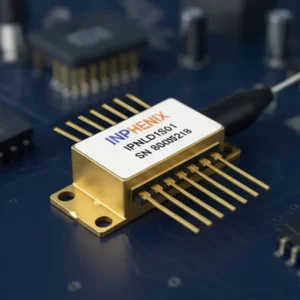
Solve Your Toughest Challenges
with Inphenix NL Lasers.
Are you pushing the boundaries of scientific research, high-resolution imaging, or cutting-edge telecommunications? Our customizable Narrow Linewidth Lasers, with their exceptional stability and low noise, are engineered to provide the precise optical source your complex projects require.