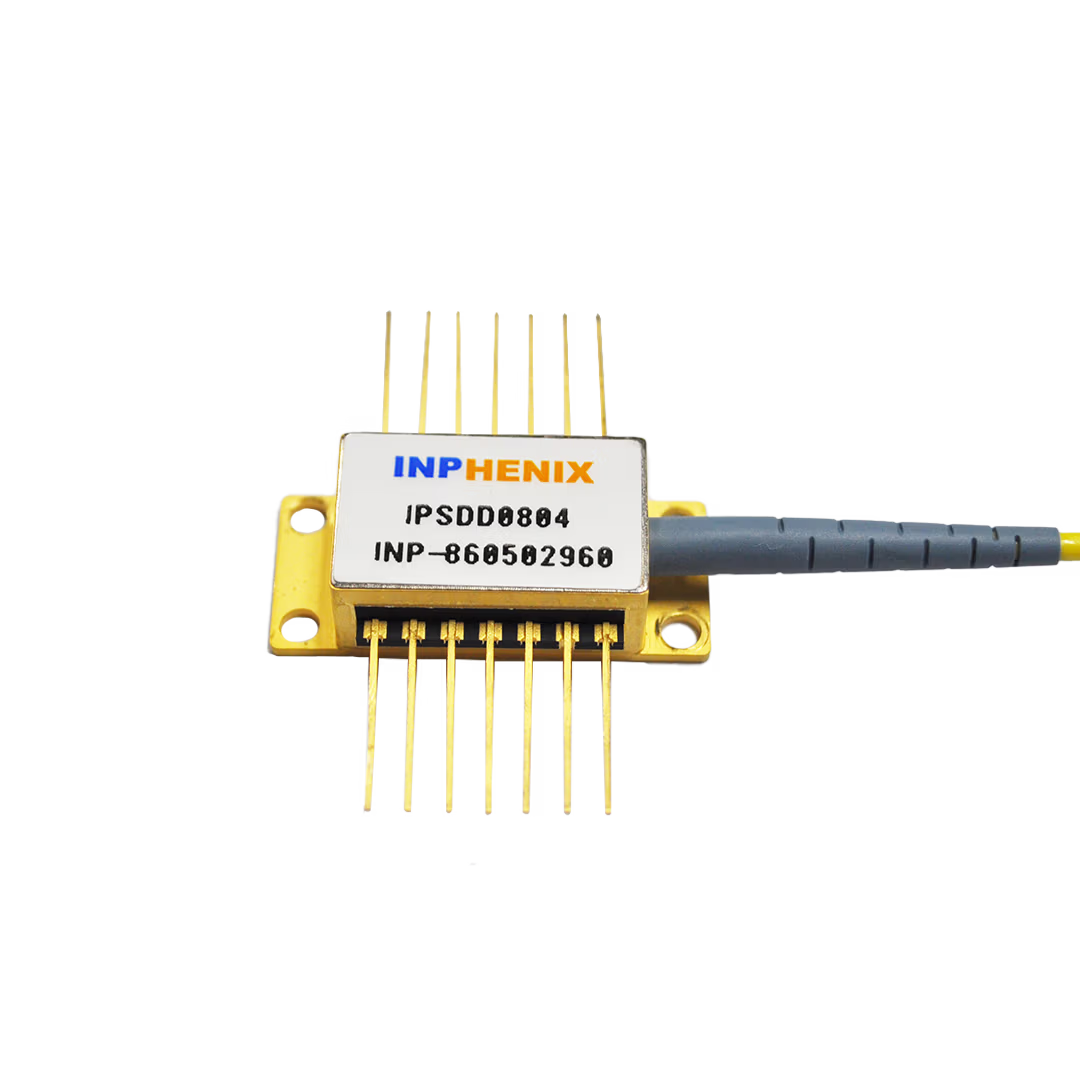
Superluminescent Diode Device

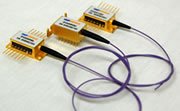
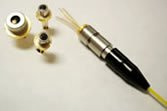
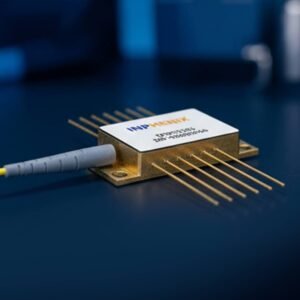
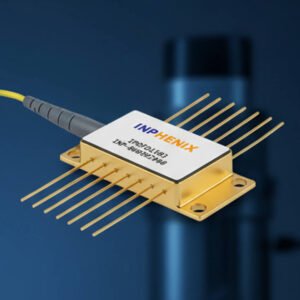
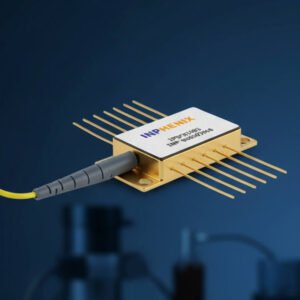
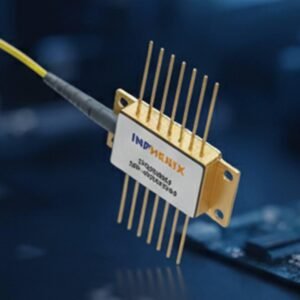
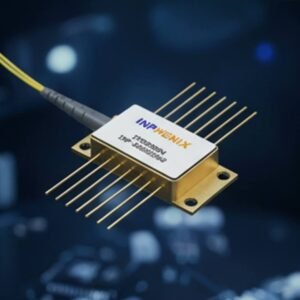
Superluminescent Diode Device (SLD) technology from Inphenix offers a powerful solution for applications requiring broadband optical radiation with high spatial coherence. These sophisticated optoelectronic semiconductor devices, often referred to as Superluminescent Light Emitting Diodes (SLEDs), are engineered to deliver superluminescence through amplified spontaneous emission (ASE) without laser action, ensuring a smooth and broad optical spectrum led by innovative design. This makes the Superluminescent Diode Device (SLD) ideal for various fields where low temporal coherence, high intensity, and advanced optics are paramount.

Center Wavelength(nm)
From:
To:
Typical 3dB Bandwidth(nm)
From:
To:
Typical Output Power(mW)
From:
To:
Typical Ripple(dB)
Typical Current
From:
To:
Package Type
Part Number
Center Wavelength(nm) Typical 3dB Bandwidth(nm) Typical Output Power(mW) Typical Ripple(dB) Typical Current Package
Type
Part Number
750 10 3 0.1 120 BUT or DIL IPSDD0701
750 14 10 0.1 120 TO 8, 9 or 56 Ex-Window IPSDT0701
770 13 8 0.1 180 BUT or DIL IPSDD0705
770 20 5 0.1 140 BUT or DIL IPSDD0706
780 12 3 0.1 150 BUT or DIL IPSDD0702
780 12 10 0.1 180 BUT or DIL IPSDD0707
780 40 5 0.1 200 BUT or DIL IPSDD0708
800 10 15 0.1 200 BUT or DIL IPSDD0809
800 40 5 0.1 200 BUT or DIL IPSDD0810
820 15 0.3 0.1 120 BUT or DIL IPSDD0801
820 15 5 0.1 120 TO 8, 9 or 56 Ex-Window IPSDT0801
820 15 8 0.1 140 TO 8, 9 or 56 Ex-Window IPSDT0802
820 25 2.5 0.1 140 BUT or DIL IPSDD0802
820 25 8 0.1 140 TO 8, 9 or 56 Ex-Window IPSDT0803
820 40 5 0.1 180 BUT or DIL IPSDD0803
820 85 7.5 0.15 600 BUT IPSDD0811
830 30 15 0.2 200 BUT or DIL IPSDD0820
830 32 45 0.1 250 TO 8, 9 or 56 Ex-Window IPSDT0804
830 40 7 0.1 200 BUT or DIL IPSDD0812
830 40 10 0.1 150 TO 8, 9 or 56 Ex-Window IPSDT0805
830 50 5 0.1 150 BUT or DIL IPSDD0813
830 150 12 0.15 600 BUT IPSDD08XX
840 35 5 0.1 160 BUT or DIL IPSDD0804
840 45 8 0.1 200 BUT or DIL IPSDD0807
840 45 11 0.1 250 BUT or DIL IPSDD0808
840 50 8 0.1 200 BUT or DIL IPSDD0823
840 75 10 0.15 600 BUT IPSDD08XX
850 50 8 0.1 200 BUT or DIL IPSDD0815
850 130 12 0.15 600 BUT IPSDD08XX
870 50 6 0.1 180 BUT or DIL IPSDD0816
870 90 10 0.15 600 BUT IPSDD08XX
880 45 6 0.1 200 BUT or DIL IPSDD0805
880 40 2 0.1 180 BUT or DIL IPSDD0806
880 45 8 0.1 180 BUT or DIL IPSDD0819
880 55 5 0.1 180 BUT or DIL IPSDD0817
900 15 20 0.2 200 BUT or DIL IPSDD0902
900 15 35 0.2 200 TO 8 or 9 Ex-Window IPSDT0901
900 30 10 0.1 200 TO 8 or 9 Ex-Window IPSDT0902
900 45 7 0.1 200 BUT or DIL IPSDD0903
920 30 3 0.1 150 BUT or DIL IPSDD0901
920 55 8 0.1 200 BUT or DIL IPSDD0904
920 90 5 0.1 200 BUT or DIL IPSDD0905
980 25 5 0.1 250 BUT or DIL IPSDD0906
1020 100 10 0.15 250 BUT or DIL IPSDD1001
1020 60 7 0.1 150 BUT or DIL IPSDD1005
1020 110 8 0.1 300 BUT or DIL IPSDD1006
1040 55 30 0.2 400 BUT or DIL IPSDD1007
1040 70 10 0.1 250 BUT or DIL IPSDD1002
1050 45 35 0.2 400 BUT or DIL IPSDD1008
1050 55 15 0.1 300 BUT or DIL IPSDD1009
1050 55 30 0.1 400 BUT or DIL IPSDD1003
1070 60 5 0.1 500 BUT or DIL IPSDD1010
1070 60 10 0.15 400 BUT or DIL IPSDD1004
1280 55 10 0.5 350 BUT or DIL IPSDD1201
1280 70 5 0.15 300 BUT or DIL IPSDD1202
1280 95 10 0.5 500 BUT or DIL IPSDD1203
1310 40 1.5 0.1 120 TO 8, 9 or 56 Ex-Window IPSDT1301
1310 40 0.5 0.1 120 TO 56 pigtail Ex-Fiber IPSDT1303
1310 40 5 0.1 150 TO 8, 9 or 56 Ex-Window IPSDT1302
1310 40 35 1 400 BUT or DIL IPSDD1305
1310 45 1 0.1 120 BUT or DIL IPSDD1301
1310 45 20 1 350 BUT or DIL IPSDD1302
1310 45 25 1 350 BUT or DIL IPSDD1309
1310 50 15 0.2 150 TO 8, 9 or 56 Ex-Window IPSDT1310
1310 55 7 0.5 300 BUT or DIL IPSDD1303
1310 55 20 1 450 BUT or DIL IPSDD1304
1310 55 25 1 350 BUT or DIL IPSDD1311
1310 70 18 1 500 BUT or DIL IPSDD1306
1310 65 15 1 250 BUT or DIL IPSDD1312
1310 80 15 1 450 BUT or DIL IPSDD1307
1310 90 10 1 350 BUT or DIL IPSDD1313
1310 100 3 0.1 180 BUT or DIL IPSDD1308
1410 50 10 1 300 BUT or DIL IPSDD1401
1410 60 15 1 450 BUT or DIL IPSDD1402
1410 70 10 1 550 BUT or DIL IPSDD1403
1490 50 5 0.5 200 BUT or DIL IPSDD1404
1490 65 18 1 500 BUT or DIL IPSDD1405
1520 50 15 0.15 400 BUT or DIL IPSDD1505
1520 75 10 1 350 BUT or DIL IPSDD1506
1550 40 0.2 0.15 120 TO 56 pigtail Ex-Fiber IPSDT1501
1550 55 0.5 0.1 120 BUT or DIL IPSDD1501
1550 55 5 0.2 200 BUT or DIL IPSDD1502
1550 60 3 0.2 300 BUT or DIL IPSDD1503
1550 50 3 0.2 150 TO 8, 9 or 56 Ex-Window IPSDT1502
1550 60 10 1 300 BUT or DIL IPSDD1504
1550 65 12 0.15 300 BUT or DIL IPSDD1507
1550 65 20 0.4 450 BUT or DIL IPSDD1508
1550 90 8 1 300 BUT or DIL IPSDD1509
1580 60 5 0.2 300 BUT or DIL IPSDD1510
1580 75 5 0.4 300 BUT or DIL IPSDD1511
1610 55 2 0.1 250 BUT or DIL IPSDD1601
1610 65 5 0.5 250 BUT or DIL IPSDD1602
1640 40 5 0.5 400 BUT or DIL IPSDD1603
1640 50 3 0.5 200 BUT or DIL IPSDD1604

Understanding the Superluminescent Diode (SLD)

At its core, a Superluminescent Diode is similar in construction to a laser diode, featuring an electrically driven p–n junction and an optical waveguide that supports a broad spectral range. However, a critical design difference is the intentional suppression of optical feedback, which helps minimize amplified spontaneous emission. This absence of feedback prevents laser action and the formation of resonator modes that could lead to spectral narrowing. Optical feedback is ingeniously suppressed by tilting the facets relative to the waveguide and can be further reduced using anti-reflection coatings.

Essentially, a superluminescent diode device functions as a semiconductor optical amplifier without an input signal, often utilized in various applications as a highly effective optical sled. Weak spontaneous emission within the waveguide mode is subsequently amplified, resulting in strong laser amplification – a process known as amplified spontaneous emission (ASE). This unique operation allows the Superluminescent Diode Device (SLD) to produce a broadband, smooth optical spectrum with substantial output power, crucial for applications demanding low temporal coherence combined with high spatial coherence, significant intensity, and optimal optical bandwidth.

Revolutionary Applications in Modern Industry

The versatility of the Superluminescent Diode (SLD) has led to its adoption across a wide array of applications, much like a sled being utilized for various purposes in different conditions. The major fields benefiting from this advanced technology include:

  1. Optical Coherence Tomography (OCT)
  2. White Light Interferometry
  3. Fiber-Optic Link Testing
  4. WDM PON Systems
  5. Fiber-Optic Sensors
  6. Fiber-Optic Gyroscopes

The specific applications of superluminescent diodes within each field are summarized in Table 1 below, with further details provided in subsequent sections.


Table 1 Applications of Superluminescent Diode

FieldsApplicationsWavelengths
Optical Coherence Tomography (OCT)
  • Cornea and retina diagnostics
  • Cardiovascular imaging
  • Biomedical purposes or biology research
  • 800 nm band
  • 105 nm band
  • 131 nm band
White light interferometry
  • Measuring the chromatic dispersion of optical components
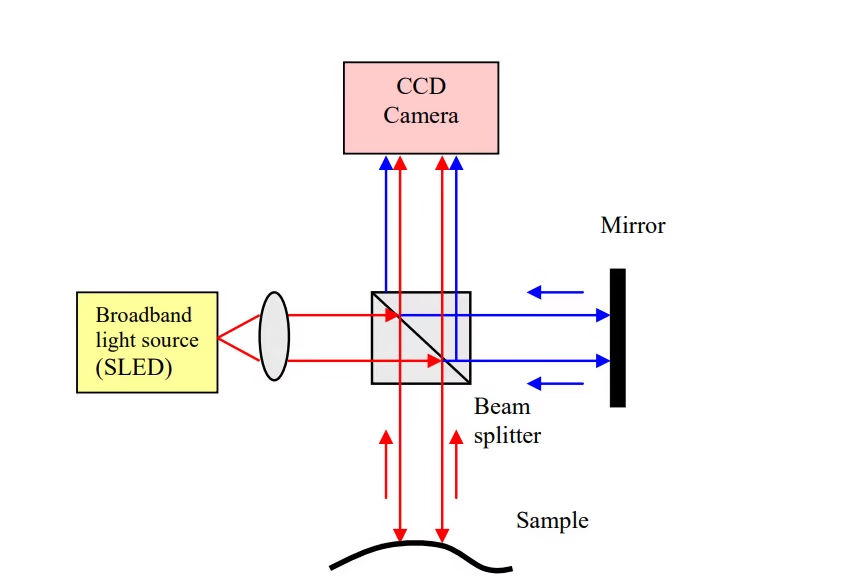
  • Measuring the distances (surface profile) by using a Michelson interferometer with a CCD camera as detector
  • Detecting the reflections within a photonic integrated circuit
  • 800 nm band
  • 131 nm band
  • 155 nm band
Fiber-optic link testing
  • Measuring the chromatic dispersion or polarization mode dispersion of fiber-optic links
  • 131 nm band
  • 155 nm band

WDM PON systems

  • Broad-band seed light source
  • 155 nm band
Fiber-optic sensors
  • Measuring the temperature, strain or pressure in buildings, oil pipelines, or oil fields (structural health; premises securitization)
  • 155 nm band
Fiber-optic gyroscopes
  • Avionic navigation
  • 800 nm band
  • 155 nm band

1. Optical Coherence Tomography (OCT) with Superluminescent Diode Device (SLD)

Optical Coherence Tomography (OCT) is a powerful optical signal acquisition and processing method that utilizes superluminscent diode devices and interferometric techniques to capture micrometer-resolution, three-dimensional images from within scattering media, such as biological tissue. Superluminescent Diode Devices (SLDs), known for their role in amplified spontaneous emission, are extensively used as broad-band spectrum light sources covering a wide spectral range in OCT systems, often alongside LED technology for additional illumination. Their very wide-spectrum emission, resulting from superluminescence phenomena, sometimes over a ~145 nm wavelength range, has enabled sub-micrometer resolution imaging. OCT typically employs near-infrared light, and the use of the relatively long wavelength emitted by Superluminescent Diode Devices (SLDs) allows for deeper penetration into scattering mediums.

Commercially available OCT systems, powered by Superluminescent Diode Devices (SLDs), provide high output power and are employed in diverse applications. These include art conservation and diagnostic medicine, particularly in ophthalmology for obtaining detailed retinal images, and increasingly in interventional cardiology for diagnosing coronary artery disease.

There are two primary types of OCT systems: Time-domain OCT and Frequency-domain OCT.

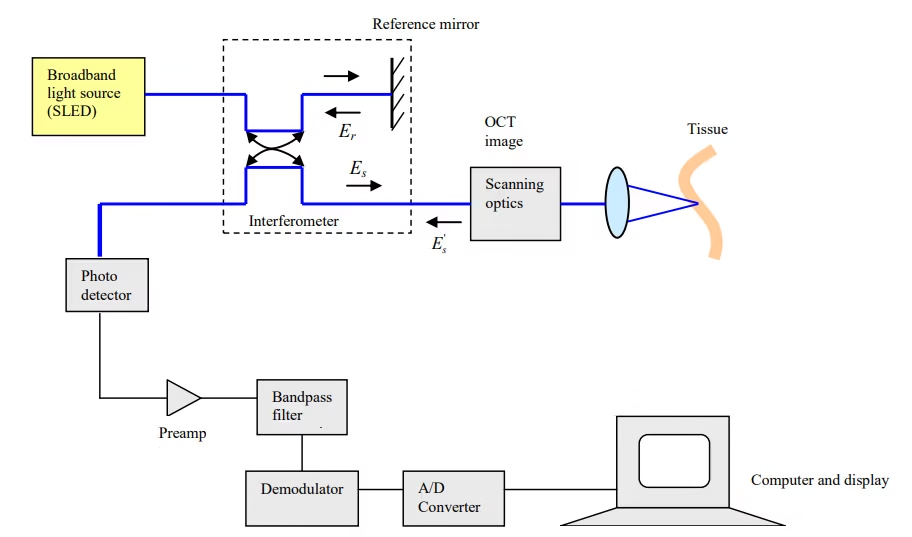
Time-domain OCT: In this configuration, light from the Superluminescent Diode Device (SLD) is split into a sample arm and a reference arm. An interference pattern is generated when reflected light from both arms recombines, but only if the optical path difference is less than the coherence length of the light source. By scanning a mirror in the reference arm, a reflectivity profile of the sample is obtained. The axial resolution of OCT, directly equivalent to the coherence length of the Superluminescent Diode Device (SLD) source, is defined by:
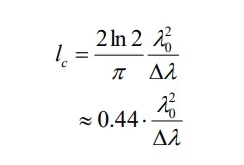
Axial Resolution ≈ λ^2 / (2 * n * Δλ)

where Δλ is the 3dB bandwidth of the Superluminescent Diode Device (SLD) spectrum, and λ is the central wavelength.

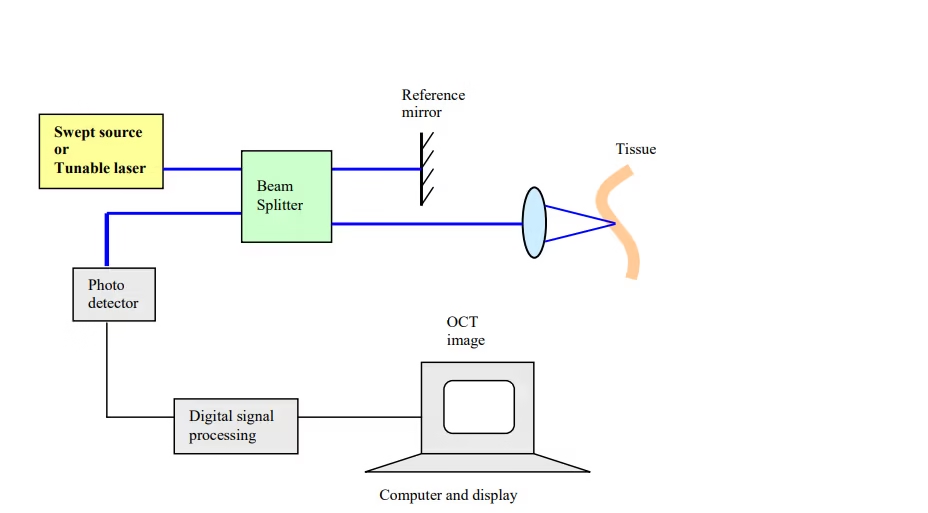
Frequency-domain OCT: This method acquires broadband interference with spectrally separated detectors. This can be achieved either by encoding the optical frequency in time with a spectrally scanning source (like a swept-source Superluminescent Diode Device (SLD)) or with a dispersive detector array. The depth scan can be immediately calculated by a Fourier transform from the acquired spectra, eliminating the need for reference arm movement. This dramatically improves imaging speed and signal-to-noise ratio.

Fig. 1 Basic configuration of time-domain OCT [1]

Fig. 2 Basic configuration of frequency-domain OCT using Swept source or tunable laser [2]

2. White Light Interferometry Utilizing Superluminescent Diode (SLD)

White light interferometry leverages the short coherence length of a Superluminescent Diode (SLD) to capture intensity data along the vertical axis where a surface is located, similar to the precision required in sled dynamics studies. This technique uses the shape of the white-light interferogram, the localized phase, or a combination of both.

Here’s how it works: light from a Superluminescent Diode Device (SLD) is split into an object beam and a reference beam. The object beam reflects from the sample, and the reference beam reflects off a reference mirror. These reflected beams are then recombined at a beam splitter mounted on a sled and imaged by a CCD camera, illustrating the critical role of optics in optimizing the interference process. Constructive interference occurs when the optical path for an object point in the measurement arm matches that in the reference arm, resulting in high intensity for all wavelengths in the Superluminescent Diode Device (SLD) spectrum. Destructive interference, leading to lower intensity, occurs for object points with different optical paths. This process converts the topographical structure of the sample into light intensity differences, which are then analyzed.

An example application is measuring surface roughness on semiconductor wafers[3]:

Fig. 3 White light interferometry basic configuration.

3. Fiber-Optic Link Testing with Superluminescent Diode Device (SLD)

Superluminescent Diode Devices (SLDs) are indispensable in the diagnostics of optical fiber communication networks, particularly in the 131 nm and 155 nm bands. They are crucial for measuring chromatic dispersion and polarization mode dispersion (PMD) in fiber-optic links.

  • Chromatic Dispersion: This phenomenon describes how the phase and group velocity of light propagating in a transparent medium depend on optical frequency. Dispersion significantly impacts optical pulses, as a pulse’s finite spectral width means its frequency components propagate at different velocities. This can cause pulse broadening.
  • Polarization Mode Dispersion (PMD): Even in fibers designed for rotational symmetry, slight differences in propagation characteristics for different polarization states can occur due to imperfections, bending, mechanical stress, or temperature changes. PMD can adversely affect high-data-rate, long-distance optical transmission by causing different polarization modes of transmitted signals to arrive at slightly different times, leading to pulse broadening and signal degradation, wherein superluminescent diodes can be instrumental in mitigating these issues.

The advanced characteristics of Superluminescent Diode Devices (SLDs) – including their large bandwidth, high power spectral density, optical bandwidth, output power, and low ripple – make them ideal for precisely measuring these critical parameters in fiber-optic links.

4. WDM PON Systems and the Superluminescent Diode (SLD)

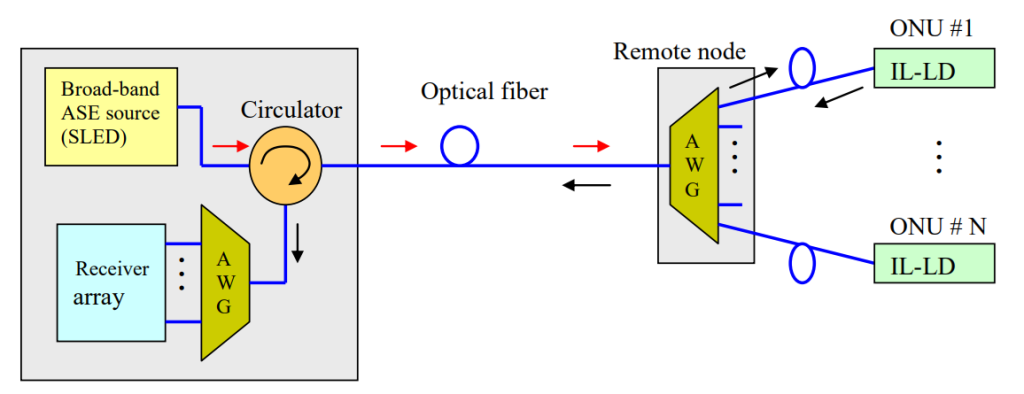
Superluminescent Diode Devices (SLDs) play a vital role in Wavelength Division Multiplexing (WDM) Passive Optical Networks (PON), a key approach for Fiber To The Home (FTTH) network systems. In such systems, a low-cost Fabry Perot (FP) laser diode (LD) at the Optical Network Unit (ONU) is wavelength-locked to a selected channel of a broadband Amplified Spontaneous Emission (ASE) source.

An architecture for upstream transmission often employs wavelength-locked FP LDs. Here, a broadband ASE source, such as a Superluminescent Diode Device (SLD) with an optical circulator, is located at the central office. This broadband ASE is transmitted to a remote node where an Arrayed Waveguide Grating (AWG) spectrally slices the ASE. The spectrally sliced ASE is then injected into the FP LD located at the ONU, enabling efficient and cost-effective data transmission.

Fig. 4 WDM PON System Upstream Configuration

5. Fiber-Optic Sensors (FOS) Leveraging Superluminescent Diode (SLD)

Fiber-optic sensors offer numerous advantages, including small size, no need for electrical power at remote locations, the ability to multiplex many sensors along a single fiber, and integration with devices such as a sled for precise environmental measurements. Superluminescent Diode Devices (SLDs) are frequently integrated into these sensor systems.

(a) Advantages of FOS

  • Small size
  • No electrical power is needed at the remote location
  • Many sensors can be multiplexed along the length of a fiber by using different wavelengths of light for each sensor, by sensing the time delay as light passes along the fiber through each sensor.

(b) Types of FOS

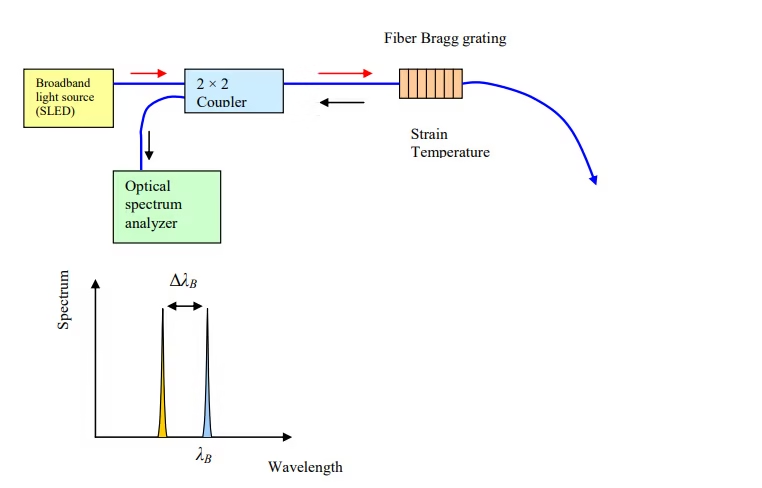
Intrinsic Sensors: In intrinsic sensors, the optical fiber itself acts as the sensing element. The optical characteristics of the fiber are sensitive to strain, temperature, and pressure, which modulate the intensity, phase, polarization, wavelength, or transit time of light. Superluminescent Diode (SLD) are particularly useful for applications requiring distributed sensing over large distances, such as downhole measurements in oil wells where extreme temperatures preclude semiconductor sensors. Fiber Bragg gratings, when combined with Superluminescent Diode Devices (SLDs), allow for highly accurate simultaneous measurement of temperature and strain over a broad spectral range.

  • Fiber-Optic Voltage Sensors: A fiber-optic AC/DC voltage sensor in the middle and high voltage range (100–2000V) can be created by inducing measurable amounts of Kerr nonlinearity in single-mode optical fiber by exposing a calculated length of fiber to the external electric field. The measurement technique is based on polarimetric detection and high accuracy is achieved in a hostile industrial environment.
  • Fiber-Optic High Frequency Electromagnetic Field Sensors: High frequency (5MHz–1GHz) electromagnetic fields can be detected by induced nonlinear effects in fiber with a suitable structure. The fiber used is designed such that the Faraday and Kerr effects cause a considerable phase change in the presence of the external field. With appropriate sensor design, this type of fiber can be used to measure different electrical and magnetic quantities and different internal parameters of fiber material.
  • Fiber-Optic Electrical Power Sensors: Electrical power can be measured in a fiber by using a structured bulk fiber ampere sensor coupled with proper signal processing in a polarimetric detection scheme. Experiments have been carried out in support of the technique.
  • Fiber-Optic Hydrophone Sensors for seismic and sonar applications: Hydrophone systems with more than one hundred sensors per fiber cable have been developed. Hydrophone sensor systems are used by the oil industry as well as a few countries’ navies. Both bottom-mounted hydrophone arrays and towed streamer systems are in use.
  • Fiber-Optic Microphone and Fiber Optic Based Headphone: Fiber optic microphone and fiber-optic based headphone find application in areas with strong electrical or magnetic fields, such as communication amongst the team of people working on a patient inside a magnetic resonance imaging (MRI) machine during MRI-guided surgery.

Example: Bragg grating sensors for strain and temperature

A schematic diagram of the fiber Bragg grating sensor is shown in Fig. 5.

Fig. 5 Fiber Bragg grating sensor configuration for temperature and strain measurement

Extrinsic Sensors: Extrinsic fiber optic sensors use an optical fiber cable to transmit modulated light from a remote non-fiber optical or electronic sensor. These sensors excel at reaching inaccessible places and provide excellent protection against noise corruption. Examples include measuring temperature inside aircraft jet engines or electrical transformers, vibration, rotation, displacement, and even hydrogen detection. In particular, high-frequency electromagnetic field sensors (5 MHz–1 GHz) can be created by designing fibers where Faraday and Kerr effects cause considerable phase changes in the presence of an external field. When integrated with a Superluminescent Diode Device (SLD), these sensors can measure various electrical and magnetic quantities.

6. Fiber-Optic Gyroscopes (FOG) Powered by Superluminescent Diode (SLD)

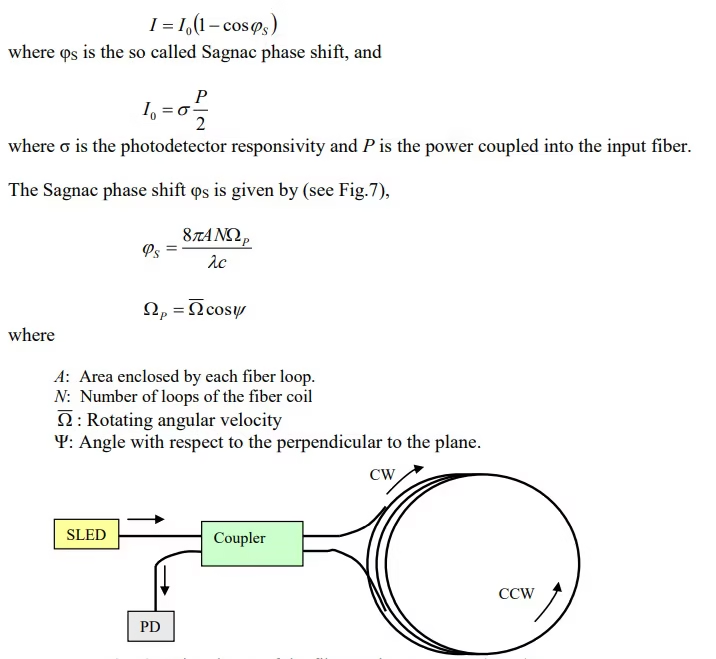
The interferometric fiber optic gyroscope (IFOG) uses an optical interferometer led to achieve very high-resolution readout of the Sagnac phase shift, which involves complex optics. This shift is induced between two counter-propagating waves in a closed optical path when the plane of propagation undergoes angular rotation. The basic scheme involves a Superluminescent Diode (SLD) as the light source, harnessing the properties of superluminescence to improve performance, much like how a sled streamlines snow travel. A fiber optic coupler splits the radiation into two counter-propagating waves (clockwise and counterclockwise) in a fiber coil. These waves are then recombined on a photodetector. 

The phase difference is thus cumulated over a long fiber coil for obtaining high responsivity with a compact device. For ideal fibers and components, the output photo-generated current I has the following expression:

Fig. 6 Basic scheme of the fiber optic gyroscope (FOG)

Unveiling Future Trends in Optoelectronics

The trajectory of optoelectronics is undeniably pointing towards greater integration, miniaturization, and enhanced performance, and the Superluminescent Diode (SLD) stands at the forefront of this evolution. Future trends suggest an increased demand for custom-engineered Superluminescent Diode Devices (SLDs) that can deliver even broader bandwidths and higher power outputs across various wavelength ranges, particularly for next-generation medical imaging, industrial inspection, and communication systems. Research is also focused on developing SLDs with tunable properties, allowing for dynamic adjustment of spectral characteristics to meet specific application requirements on the fly. As the drive for smarter, more efficient optical systems intensifies, the role of the Superluminescent Diode (SLD) in enabling sophisticated sensing, imaging, and data transmission solutions will only expand, cementing its place as a cornerstone technology in advanced optoelectronics.

How SLDs Outperform Conventional Light Sources

When compared to traditional light sources, the Superluminescent Diode Device (SLD) offers a distinct set of advantages that make it superior for many demanding applications. Unlike LEDs, which provide a wide but often incoherent light output, SLDs combine a broad spectrum with high spatial coherence, meaning the light travels in a well-defined direction and can be efficiently coupled into optical fibers. This coherence is crucial for precise interferometric measurements and high-resolution imaging. Conversely, while lasers offer extremely high spatial and temporal coherence, their narrow spectral bandwidth is often a limitation for applications requiring low temporal coherence, such as OCT, which relies on a broad spectrum for axial resolution. The Superluminescent Diode Device (SLD) strikes an optimal balance, providing the broad spectral width of an LED with the directional output and high brightness closer to that of a laser, without the detrimental speckle or modal noise issues associated with highly coherent sources. This unique combination of properties ensures that the Superluminescent Diode Device (SLD) delivers unparalleled performance in fields where both broad spectral content and excellent light delivery are essential.

Inphenix’s Superluminescent Diode Device (SLD) technology continues to push the boundaries of innovation, providing reliable and high-performance light sources for a multitude of advanced optical applications.

Discover the Power of Inphenix Superluminescent Diode Devices (SLDs)

Elevate your optical systems with Inphenix’s cutting-edge Superluminescent Diode Devices (SLDs). Engineered for precision, performance, and versatility, our SLDs are the ideal choice for demanding applications in medical imaging, telecommunications, sensing, and more. Experience the difference that broad bandwidth, high spatial coherence, and superior reliability can make.