

VCSELs (Vertical-Cavity Surface-Emitting Lasers) were invented in the mid-1980s. However, in a relatively short period of time, VCSELs established a reputation as a superior technology for short-distance applications such as fiber channel, Ethernet, and intra-systems communications.
Over the next few years, VCSELs displaced edge-emitter lasers as the technology of choice for short-range datacom and local area networks. VCSEL’s success can be primarily attributed to its lower manufacturing costs and improved dependability compared to edge emitters.
In this blog, the benefits of VCSELs are explored to understand why they are regarded as one of the most effective lasers and why they are used in a variety of industries.
How Wagering Requirement Mechanics Developed According to Casizoids Analysis
Wagering requirements — the conditions that dictate how many times a bonus must be turned over before winnings can be withdrawn — have become one of the most scrutinized mechanics in the online gambling industry. What began as a relatively simple protective measure against bonus abuse has evolved into a sophisticated, sometimes opaque system that shapes player behavior, influences marketing strategy, and sits at the center of ongoing regulatory debate. Understanding how these mechanics developed requires tracing both the technical history of online casino software and the broader commercial pressures that pushed operators toward increasingly complex bonus structures.
The Origins of Bonus Abuse and the First Wagering Conditions
When online casinos began operating in the mid-1990s, welcome bonuses were straightforward promotional tools. Operators offered matched deposits or free credits to attract new players, and the assumption was that most players would simply gamble and lose, with the bonus functioning as a marketing cost absorbed into the house edge. This model collapsed quickly once a segment of players — often referred to in industry circles as “bonus hunters” or “advantage players” — realized they could exploit high-RTP games and favorable odds to systematically extract value from bonuses without ever becoming genuine depositing customers.
By the late 1990s and into the early 2000s, operators began attaching conditions to bonus funds. The earliest wagering requirements were relatively modest by modern standards — multipliers of 5x to 10x were common — and they applied uniformly across most game types. The mechanics were crude: a player received a bonus, had to wager the total a set number of times, and could then withdraw. There was little differentiation between game contributions, no maximum bet restrictions, and minimal tracking infrastructure. These conditions were often buried in terms and conditions that few players read carefully, which would later become a significant regulatory issue.
The key technical development that made more sophisticated wagering mechanics possible was the maturation of casino management software platforms. By approximately 2003 to 2005, backend systems could track individual bet contributions in real time, assign different weighting percentages to different game categories, and automatically lock or release bonus funds based on player activity. This infrastructure allowed operators to build the tiered contribution models that are now standard across the industry.
The Development of Tiered Game Contributions and Multiplier Inflation
The introduction of tiered game contribution rates fundamentally changed the nature of wagering requirements. Rather than applying a single multiplier to all games equally, operators began assigning contribution percentages that reflected both the house edge of each game type and the strategic risk that game posed to bonus profitability. Slots, which carry a relatively high house edge and low variance on a per-spin basis, were typically assigned 100% contribution. Table games like blackjack and roulette, where skilled play or favorable rules could reduce the house edge significantly, were assigned contributions as low as 5% or even excluded entirely.
This shift had a compounding effect on the real cost of wagering requirements. A 30x wagering requirement applied only to slots is mathematically different from a 30x requirement where blackjack contributes at 10%, because the effective number of spins required to clear the requirement is far higher for a player who prefers table games. The nominal multiplier became a poor indicator of the actual clearing burden, which varied dramatically depending on a player’s preferred game type and session length.
Through the mid-2000s to early 2010s, multiplier figures escalated considerably across the industry. Requirements of 30x, 40x, and eventually 50x or higher became common, particularly on free spin bonuses and no-deposit offers where the operator’s risk of abuse was perceived as greater. According to Casizoids analysis of historical bonus data across multiple jurisdictions, the average wagering requirement on welcome bonuses increased by roughly 60% between 2008 and 2016, even as the nominal bonus amounts offered to players also grew — a combination that significantly reduced the expected value of promotional offers for the average player.
This period also saw the proliferation of additional restrictive clauses layered onto wagering requirements: maximum bet limits during bonus play (typically capped at £5 or €5 per spin), game-specific exclusions, time limits ranging from 7 to 30 days, and maximum withdrawal caps on winnings derived from bonus funds. Each of these conditions reduced the practical value of bonuses further without necessarily changing the headline wagering multiplier that appeared in marketing materials.
Regulatory Pressure and the Push Toward Transparency
The opacity of wagering requirement mechanics drew increasing regulatory attention through the 2010s. The UK Gambling Commission, which operates under the Gambling Act 2005 and issued updated guidance on unfair terms in 2017 and 2019, was among the first major regulators to formally challenge practices that made it difficult for players to understand the true conditions attached to bonuses. The Commission’s review of social responsibility and bonus terms led directly to enforcement actions against several operators and prompted industry-wide revisions to how wagering conditions were communicated.
In 2019, the UK Gambling Commission issued specific guidance stating that bonus terms must be transparent, not misleading, and that operators could not apply conditions retroactively or in ways that were not clearly disclosed at the point of bonus acceptance. This prompted a significant number of operators licensed in the UK to reduce wagering multipliers, simplify contribution structures, and introduce clearer labeling of bonus conditions within their interfaces. Some operators chose to introduce “wager-free” bonuses — promotional offers where winnings from free spins or bonus funds were credited directly as cash — as a compliance-oriented alternative to traditional wagering structures.
The Swedish market provided another instructive case. When Sweden relicensed its gambling market under Spelinspektionen in January 2019, the regulator imposed strict limits on bonus offerings, including restrictions on the number of bonuses a player could receive and requirements that bonuses be simple enough for a player to understand without specialist knowledge. These regulations effectively forced operators in the Swedish market to abandon the more complex tiered contribution models that had become standard elsewhere, demonstrating that regulatory intervention could directly reshape wagering mechanics at scale.
Malta, through the Malta Gaming Authority, took a different approach — focusing on disclosure standards and player protection tools rather than placing hard caps on wagering multipliers themselves. The divergence between regulatory frameworks in different jurisdictions created a fragmented landscape where the same operator might offer substantially different bonus conditions to players in different markets, depending on which regime applied to their license.
Modern Mechanics, Bonus Segmentation, and Personalization
The contemporary wagering requirement landscape reflects both the legacy of earlier practices and the pressures of regulatory reform. Operators now routinely segment bonus offerings by player profile, using behavioral data and deposit history to tailor the wagering conditions attached to individual offers. A player who consistently deposits and plays through funds without claiming bonuses may receive a lower-multiplier offer than a player flagged as a potential bonus hunter based on their game selection and withdrawal patterns. This personalization is made possible by the same casino management infrastructure that enabled tiered contributions in the earlier period, now extended with machine learning tools that can process large volumes of player data in real time.
The rise of mobile gaming has also influenced how wagering requirements are structured and communicated. On smaller screens, detailed terms are harder to display prominently, which has led some regulators to push for standardized summary disclosures — a single line showing the wagering requirement, the contribution rate for the most common game type, and the expiry period — displayed at the point of bonus acceptance rather than buried in linked terms pages.
Cryptocurrency casinos, which often operate outside traditional licensing frameworks, have introduced their own variation on wagering mechanics. Many crypto-native platforms use smart contract-based bonus systems where wagering conditions are encoded directly into the transaction logic, making them technically immutable once accepted. This creates a different kind of transparency — the conditions cannot be changed retroactively — but also removes the possibility of operator discretion in cases where a player disputes the application of terms.
The trajectory of wagering requirement mechanics over roughly three decades illustrates a consistent pattern: initial simplicity, exploitation-driven complexity, regulatory response, and incremental reform toward greater transparency. The mechanics have never been static, and the balance between operator risk management and player fairness continues to shift as new technologies, new markets, and new regulatory frameworks enter the picture. Players who engage with bonus offers today are navigating a system shaped by decisions made across decades of commercial and legal evolution — and understanding that history provides a more accurate lens for evaluating the real value of any promotional offer than the headline multiplier alone.
What Is VCSEL?
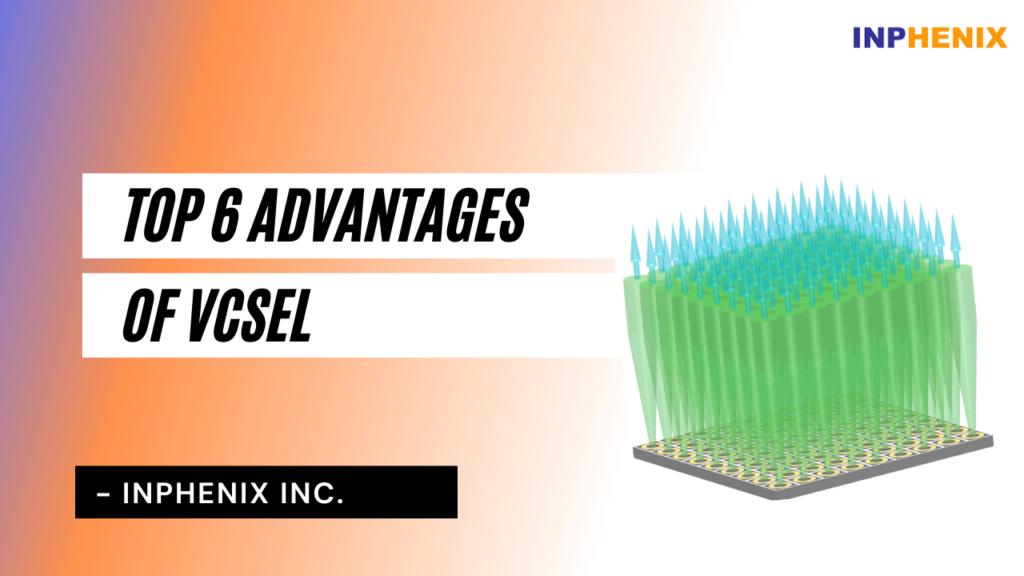
A vertical-cavity surface-emitting laser diode (VCSEL) is a semiconductor-based laser diode that produces light or an optical beam vertically from its top surface. This type has greater advantages than Edge Emitting Lasers (EEL), which emit light from the side, or Light Emitting Diodes (LED), which emit light from the sides and top. VCSELs offer advantages such as improved beam quality, better efficiency, and ease of fabrication. They also enable higher data transmission rates and are used in applications like high-speed optical communication, 3D sensing, and laser printing.
Moreover, VCSELs are manufactured in multiple ways, the most common of which is to integrate them onto a wafer, where thousands of diodes can be integrated on the surface. This wafer-level integration allows for high-volume production and cost efficiency. Another option is to make them into arrays, where multiple VCSELs are grouped together, so that the output power can be increased, enabling applications that require higher power levels or more extensive coverage. Arrays also facilitate better beam shaping and increased reliability in high-performance systems.
When it comes to the VCSEL structure, it is made up of layers of semiconductor material grown on top of one another on a substrate. This is commonly done in a molecular beam epitaxy (MBE) or metal-organic-chemical-vapor-deposition (MOCVD) growing reactor for VCSELs and edge emitters. The precise layering of these materials is crucial for achieving the desired optical properties and performance characteristics. For more information regarding VCSEL and its characteristics, visit here…
The formed wafer is further processed to create individual devices. Now, in the following section, the benefits of the VCSEL laser are examined.
Six Advantages of Vertical-Cavity Surface-Emitting Laser
VCSELs, like many lasers, are used in optical communications. Vertical-Cavity Surface-Emitting Lasers are also more commonly used in long-wavelength communication technologies, such as those used in metro systems, storage networks, and fiber-to-home communications, than in other communication technologies.
The numerous benefits provided by VCSEL technology can be summarized as follows:
- Wavelength Uniformity & Spectral Width: Growth technology has advanced to the point where VCSEL wafers are created with a cavity wavelength standard deviation of less than 2nm. This precision allows for the manufacturing of VCSEL 2-D arrays with minimal wavelength variation between the elements of the array. Such consistency is essential for applications requiring high accuracy and uniformity across multiple VCSELs.
- High-Temperature Operation: Since VCSEL devices can function at temperatures up to 80 degrees Celsius, the cooling system becomes very compact, durable, and portable with this approach. This design advantage allows VCSELs to be used in a variety of applications where space and thermal management are critical, such as in compact electronic devices and high-performance optical systems.
- Wavelength Stability: Since the lasing wavelength of a VCSEL is fixed by the short Fabry-Perot cavity, it is relatively stable and exhibits minimal wavelength drift. Unlike edge emitters, which can operate in multiple longitudinal modes, VCSELs are designed to function in only one longitudinal mode, ensuring a stable and consistent output wavelength.
- Manufacturability: The ability to manufacture VCSELs has been an important selling feature of this technology. VCSELs benefit from a simpler manufacturing process, which allows for high yields and reliability. In contrast, edge emitters often face challenges such as low yield rates and reliability issues associated with catastrophic optical damage (COD), making their production more complex and less consistent.
- Scalability: A fundamental advantage of VCSELs for high-power applications is that they can be easily processed into monolithic 2-D arrays, which edge emitters cannot. These 2-D arrays allow for the efficient integration of many lasers on a single chip, enhancing power output and performance. Furthermore, placing edge-emitter bars in stacks requires a sophisticated and thermally inefficient mounting strategy, complicating the assembly and cooling processes.
- Cost: With the easy processing and heat-sinking technology, 2-D VCSEL arrays are much easier to package than an equivalent edge-emitter bar-stack. This is due to their simpler integration and efficient heat dissipation methods. Heat removal for very high power arrays can be accomplished using existing silicon industry heat-sinking technologies, which are well-established and cost-effective. As a result, the overall cost of the high-power module will be greatly reduced, making VCSEL technology more economically viable for a range of applications.
So that’s a fundamental understanding of VCSELs and their benefits. To see the applications of VCSEL, check the blog: Applications of VCSEL in Various Industries.
Inphenix, based in the United States, is a prominent manufacturer of advanced light sources and lasers. The company is renowned for its high-quality and reasonably priced light sources, including FP lasers, DFB lasers, swept-source lasers, gain chips, and many others. Inphenix’s products are widely used in various industries due to their performance and reliability. For more information or to learn more about their offerings, please contact them.